New Doors · Brampton
Commercial Sectional Door Repair
The door reaches the floor, then reverses before staying closed. The threshold is clear, but a sensing edge is distorted and one photoelectric sensor has moved out of line with its partner.
Commercial Sectional Door Repair
In plain words
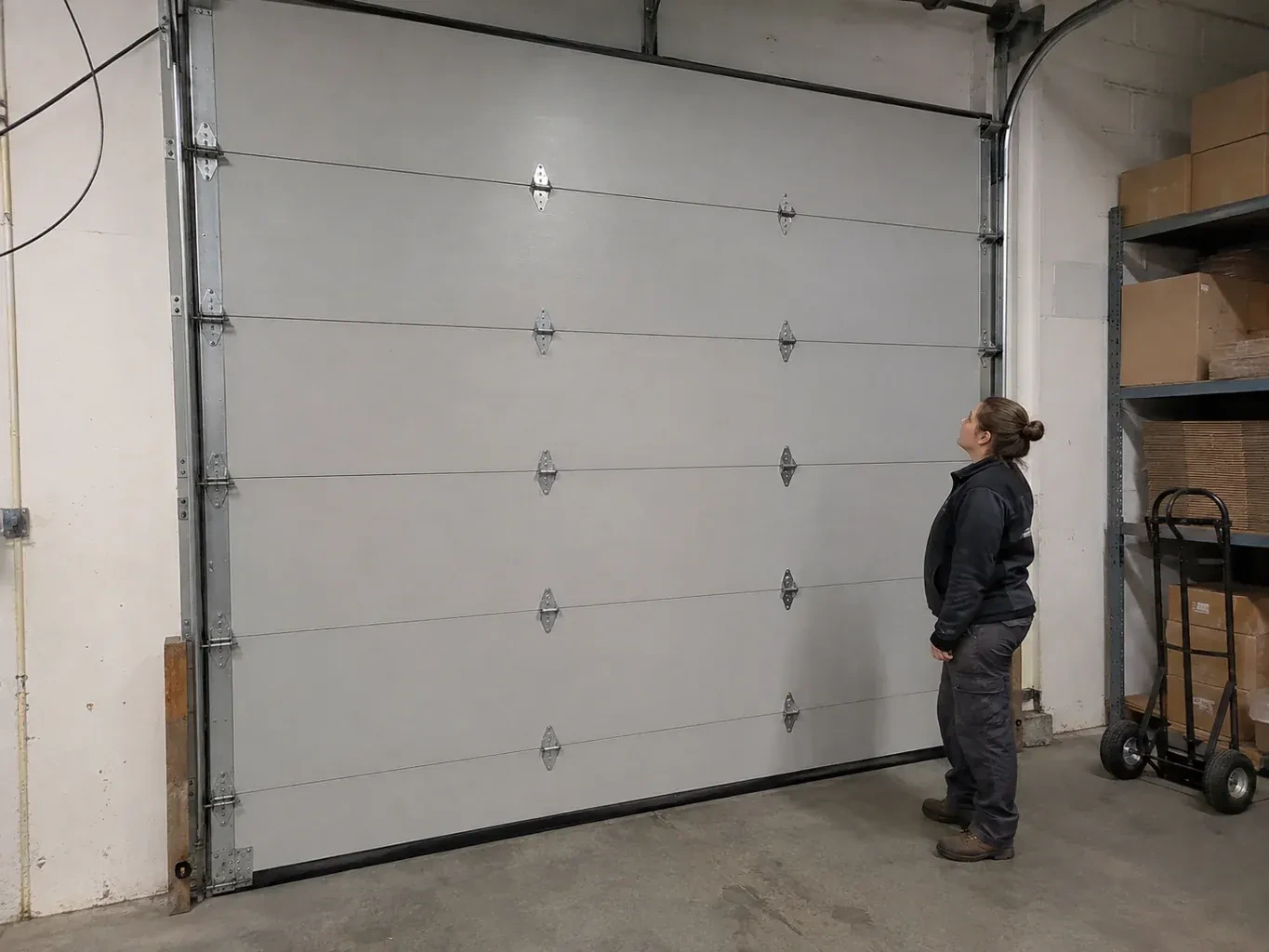
Impact repair is more than flattening a dented panel. The damaged section may have transferred force into an end stile, hinge, roller carrier, vertical track or jamb attachment. The repair therefore follows the load path from the contact point into the supporting hardware. A replacement section or reinforcement is matched to the door construction, track spacing is restored, and every affected connection is tightened or renewed. Final cycling confirms that the repaired door follows the curve cleanly and seats evenly at the opening.
How the visit goesCold weather has exposed a widening gap below the closed door. The bottom retainer is bent, the rubber seal is split, and uneven seating lets drafts and slush enter the work area.
Brampton
How the visit goes
Reading an uneven door
A crooked bottom edge leads to a side-by-side comparison. Cable condition and length, drum grooves, shaft position, bearing movement and bottom fixtures are viewed together. The technician notes whether one cable is slack, crossed or frayed and whether a roller has left its normal track position. Measurements at the tracks show if the guides remain parallel and plumb. The door is then secured so its weight cannot deepen the imbalance during inspection. These findings reveal whether the repair belongs in the lifting system, track alignment or impact-damaged hardware.
Re-establishing the weather seal
A damaged bottom seal is removed from its retainer, and the retainer is straightened or replaced when impact has distorted it. The new seal is sized for the door and floor condition, then fed evenly so it reaches both corners without stretching. Side and header weatherstrip are positioned for continuous contact while leaving the door free to move. If an uneven landing caused the original gap, cable level or track position is corrected first. The final fit is viewed from both sides with the door closed and checked again after cycling.
High-lift cables that remain controlled
Corrected lift geometry leaves the cables tensioned and seated as the door moves from vertical travel into its upper position. Because overhead components can be difficult to view from the floor, the service record should capture the drum, cable and spring details used in the repair. Staff can monitor the visible lower cable runs and listen for changes near the transition. A planned inspection can then review track supports, shaft bearings and cable condition at height with suitable access equipment, preserving the adjustments made during repair.
Commercial Sectional Door Repair
In the van
- Lift cables and drums
- Bottom fixtures
- Commercial door sections
- Vertical and horizontal track
- Track brackets and back hangs
What affects the quote
Same fees day, night or weekend
1Extent of impact transfer
A dent confined to one section differs from force that also bent an end stile, roller, guide rail, jamb bracket or supporting anchor.
2Weather-seal work
Bottom rubber alone is different from a bent retainer, uneven landing, damaged perimeter seal or drainage issue that also needs correction at the opening.
3Track support condition
Loose back hangs, shifted brackets, damaged splices or weak anchors add alignment and support work beyond replacing the visibly bent length of track.
Commercial Sectional Door Repair: questions
What causes a commercial sectional door to become noisy?
Common sources include roller-bearing wear, loose hinges, dry pivots, a rubbing panel, track movement, shaft-bearing wear and operator-chain vibration. The point in the cycle where the sound occurs helps isolate it. A technician watches and listens during controlled travel, looks for play or contact marks, and services the component creating the repeatable noise.
Can one damaged section be replaced on its own?
Often it can, provided a compatible section is available and the surrounding panels, end stiles and hardware remain serviceable. Matching involves more than width and height: thickness, profile, insulation, joint shape, reinforcement and hinge pattern all matter. The technician also checks whether the impact shifted track or mounting points before deciding that a single-section repair is the right scope.
What makes a sectional door different from a rolling door?
A sectional door is built from horizontal panels joined by hinges. Rollers guide those sections through vertical, curved and sometimes horizontal track. A rolling door uses narrow slats that coil around a barrel above the opening. Because the constructions differ, sectional repair centres on panels, hinges, rollers, tracks, lift cables and counterbalance components matched to that system.
Installation & Upgrades
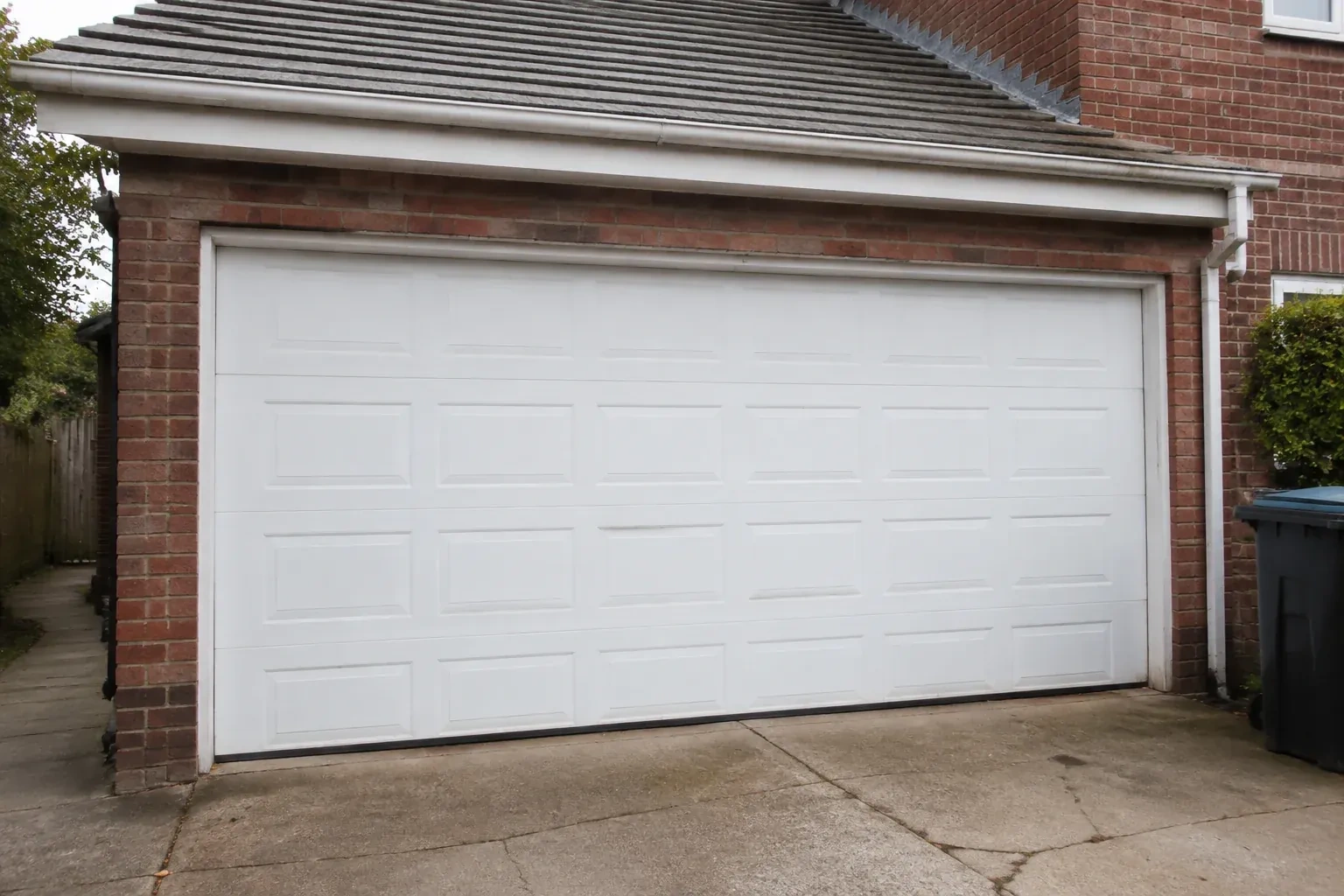
- Insulated Steel Garage Door InstallationThe room above your attached garage stays chilly while the steel door below feels cold to the touch.
- Wind-Rated Garage Door ReplacementYour building designer has supplied positive and negative pressure values for the garage opening.
- Carriage-House Garage Door InstallationA front elevation update has brought new trim, lighting and a deeper colour palette, leaving the…
Commercial Sectional Door Repair near you
Whatever kind of door is on your building in Brampton, from a single wood door on an older house to a rolling steel door on a workshop, we have a service that fits it. The pages here explain what gets checked first, how the work proceeds and how to look after the result.