Springs · Brampton
Extension Spring Replacement
Open the door by hand and it drifts back down on its own, a little at first and then all at once. Nothing is broken that you can see, but the springs along the tracks look tired, rusty and slightly sagging.
Extension Spring Replacement
In plain words
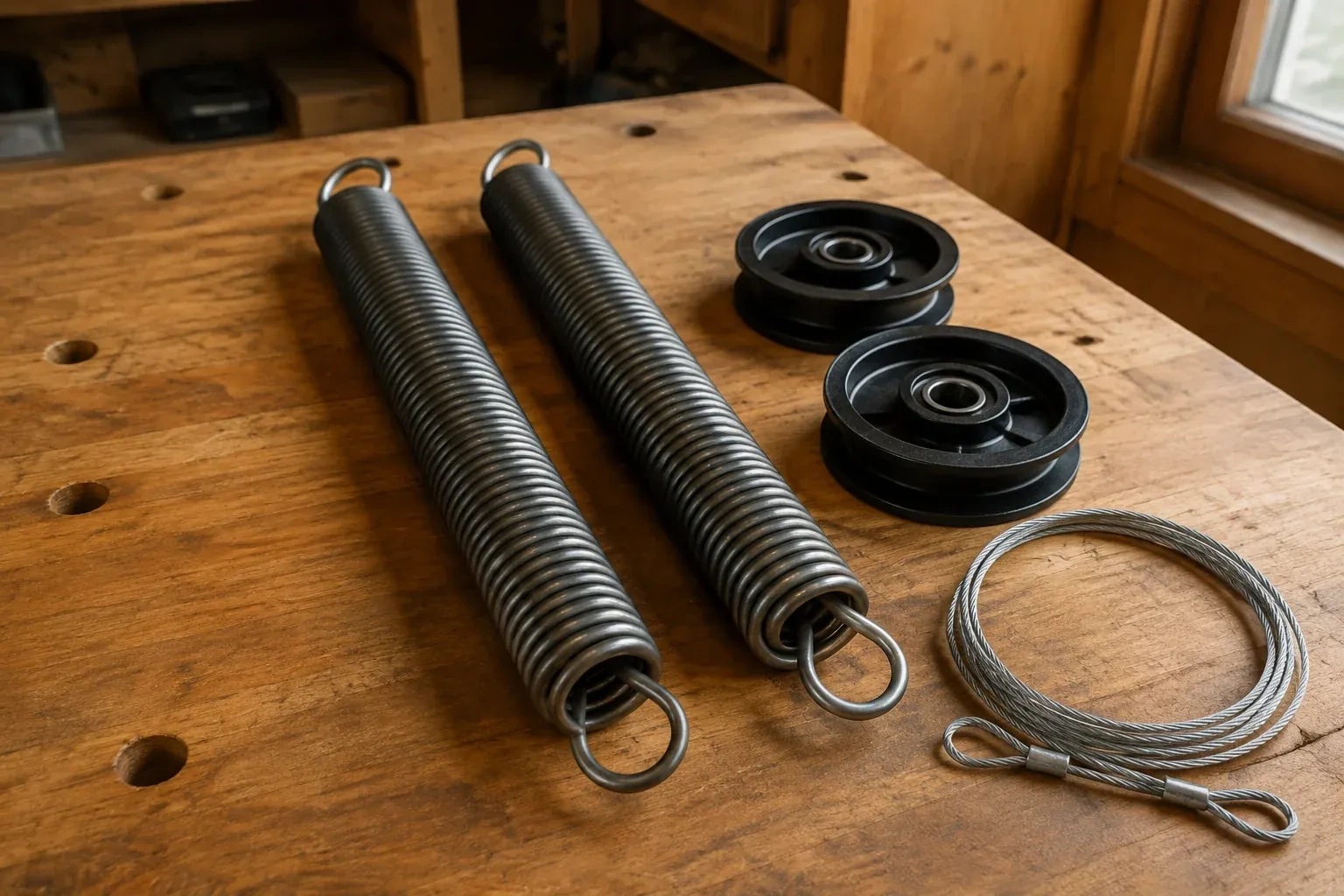
Every extension spring should carry a containment cable, and replacement is the moment to make sure yours do. A containment cable runs through the centre of the spring and is anchored at both ends, to the rear hanger and to the bracket at the front of the track. It does no lifting; its purpose is to hold a spring that breaks so the pieces stay on the cable. Many older doors predate this practice, which a home inspection checklist checks for. When springs are replaced, new containment cables are fitted with them, which keeps a broken spring's pieces contained, not the door's weight, balance or safety.
How the visit goesThe home inspector's report on the house you are buying flags the garage door: extension springs with no safety cable running through them, coils showing rust, and a door that sank when he lifted it partway. The seller has never had it looked at.
Brampton
How the visit goes
Containment cables, present or missing
The question the industry's own inspection checklist asks of every extension-spring door is whether each spring has a cable running through its centre, anchored at both ends. The technician checks for it on both sides, then checks its condition: a cable that is frayed, kinked, anchored to a loose screw or simply tied off to the hanger is not doing its job. Doors installed decades ago often have none at all, and doors that had a spring changed by a previous owner sometimes have one side fitted and one forgotten. Fresh containment cables go on with the new springs, and their anchor points are set into solid framing so that a spring which breaks stays on its cable.
Balancing the door by hand
Balance is judged with the opener still disconnected. The technician lowers the door to the floor, then lifts it: it should rise with modest effort, stay put when let go at about waist height, sit steady when fully open, and come down under control rather than dropping. If it sinks, both springs need a little more stretch and each S-hook is moved one hole to take up cable; if it climbs on its own, one hole the other way. Adjustments are always made in pairs, with the door open and clamped again each time, so the two springs stay equal. Two or three rounds usually settle it.
Containment cables, and leaving them be
Your door now has a cable running through the middle of each spring, anchored at the back hanger and at the front of the track. It carries no meaningful load while the springs work, though a trace of slack as the door cycles is normal. Its job begins only if a spring ever breaks, when it holds the pieces on the cable instead of letting them fly. It should not be removed, used to hang anything, or tied back to the wall. If it ever looks badly slack, frayed or pulled from its anchor, call to have it corrected promptly rather than waiting for a routine visit. A home inspector looks for this cable when a house is sold.
Extension Spring Replacement
In the van
- Track clamps or locking pliers
- Door-weighing scale
- S-hooks and adjusting clips
- Rear spring hangers and angle iron
- Extension springs, matched pair
What affects the quote
Same fees day, night or weekend
1Condition of the lift cables
Cables with fraying, rust at the loop or a kink are renewed as a pair while the springs are off. Sound cables are re-routed and set, and the quote says which applies.
2Converting to torsion instead
Where the garage has the headroom, some owners take the opportunity to move to a torsion system. That is a different job with different hardware and is quoted as its own option.
3Rollers, hinges and bottom brackets found worn
Cracked roller wheels, split hinges or a bottom bracket rusted at the cable pin are pointed out during the inspection and offered as optional items, since the door is already open and secured.
Extension Spring Replacement: questions
Could I switch to torsion springs instead of replacing the extension ones?
Sometimes, and it is worth asking. A torsion system needs room above the door opening for its shaft and a header that can carry the spring bracket, which many older garages with a low ceiling simply lack; extension springs are there for that reason. Where the headroom exists, a conversion is a separate job with its own hardware and quote. The technician can tell you on the spot which route suits your garage.
Do the pulleys need replacing at the same time?
Often, yes. Each side has two pulleys, one on the spring and one fixed at the front of the track, and the cable rides over both on every trip. A pulley whose wheel has worn a sharp groove, or whose bearing has stiffened, drags on the cable and adds load the spring has to overcome, which is a common reason the old spring wore early. Pulleys that spin freely and run true can stay.
Can I keep using the opener until the spring is replaced?
It is better to leave the door where it is. With one spring gone, the opener is lifting most of the door's weight on its own, which strains the motor, can bend the top section and often throws a cable off its pulley, adding to the work. Use another door in and out, keep the bay clear, and let the technician move the door once it is secured.
Springs & Hardware
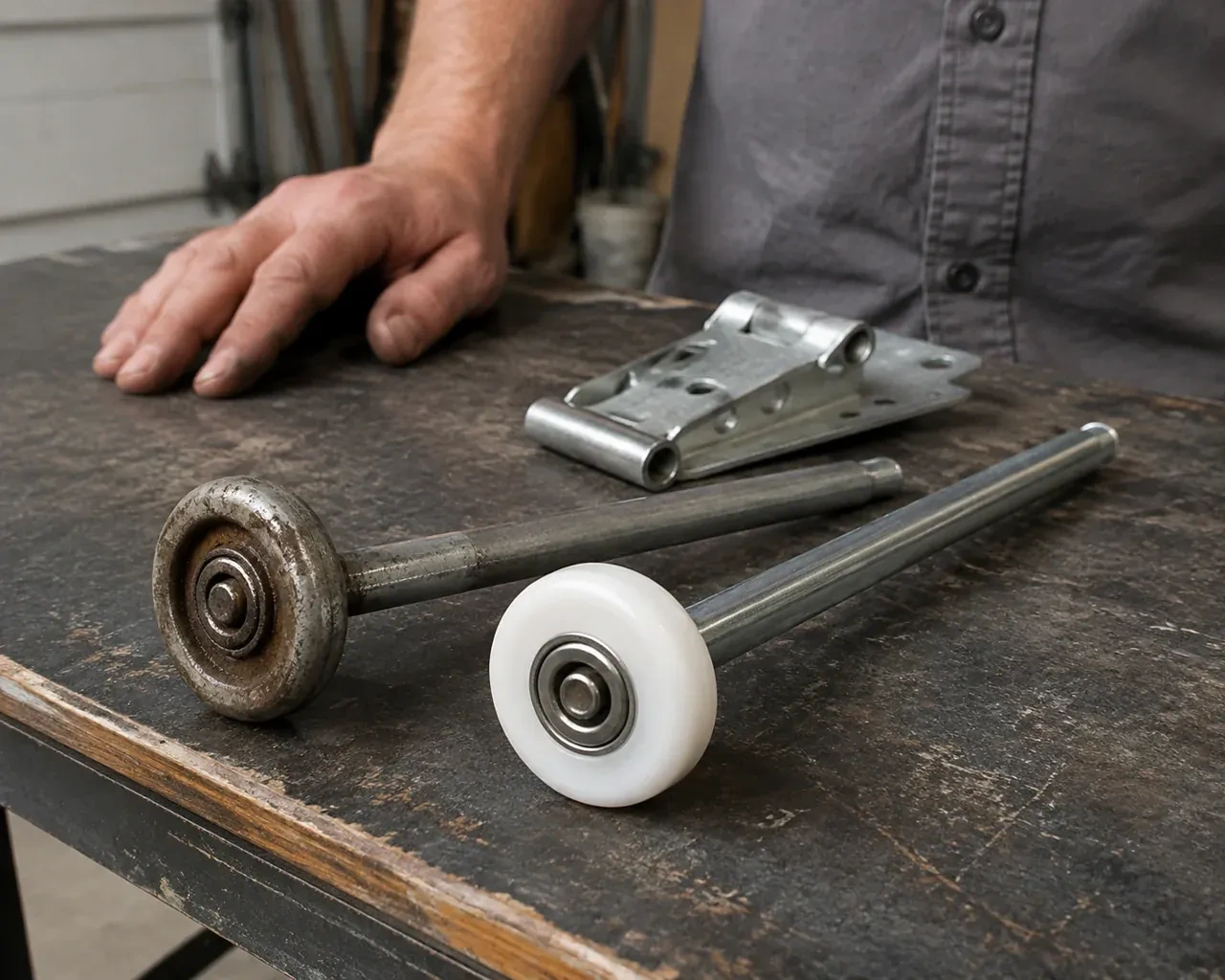
- Garage Door Hinge ReplacementEvery time the door goes up there is a sharp pop from the same spot, about a metre off the floor…
- Garage Door Track Repair or ReplacementThe door climbs crooked, one side clearly ahead of the other.
- Garage Door Cable ReplacementAfter years of slushy winters the cables look thinner near the bottom brackets, with rust streaks…
Extension Spring Replacement near you
Whatever kind of door is on your building in Brampton, from a single wood door on an older house to a rolling steel door on a workshop, we have a service that fits it. The pages here explain what gets checked first, how the work proceeds and how to look after the result.